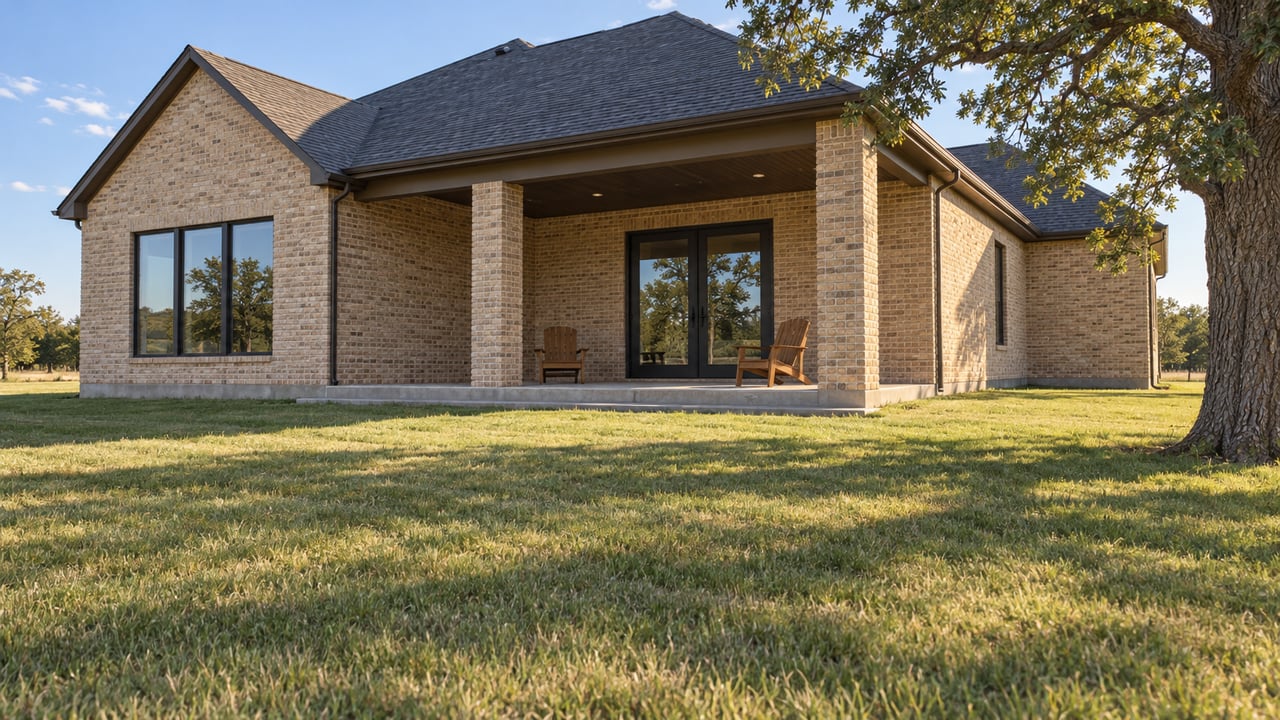
Goldsby Rewrote Its Rules for a Second Home on Your Land. What Buyers Should Check First
October 29, 2026
October 29, 2026
Many buyers who look at land inside Goldsby's town limits have a second home in mind for later. It might be a parcel split off for a grown child, or a small house out back for a parent. On July 9, 2026, the Goldsby Board of Trustees adopted a set of ordinances that changed both of those plans.
The changes set how long you have to own the land, who you're connected to, and what approvals you hold before anything gets built. A buyer can close on a tract with plenty of acreage and still find that the family plan has to wait a year or go through a longer process.
The ordinances were posted as legal notices on the Purcell Register's website on July 17, 2026. Each one takes effect 30 days after it was passed, approved and published. These rules apply inside Goldsby town limits, so before anything else, confirm which side of the town line a property sits on.
Ordinance 2026-006 rewrote Goldsby's "lot split" exception. That exception lets an owner divide land without the preliminary and final plats a full subdivision needs. To use it now, the land has to count as an "Existing Tract." That means a parcel held in single ownership under a deed or other conveyance recorded in the McClain County land records at least twelve calendar months before the split application goes in.
For a buyer, the clock runs from the date your deed is recorded in the county land records. If that recording happens this November and you plan to deed part of the land to a family member next spring, the twelve months won't have passed by spring.
The same section sets a cap. A split can produce no more than three lots in total, and the parcel you keep counts as one of them. Once a tract has been through more than three lot-split exceptions, at any point in its history, it can't use the exception again and has to go through full platting. That history stays with the land when it sells, so ask what has already been split off before you buy.
Under the new text, a split follows this sequence:
The Town's posted lot split application form asks for the application and survey at least two weeks before a Planning Commission meeting. It lists a nonrefundable $5 fee per lot. The form doesn't mention the new disclosures, so check the current form and fee with the Town Clerk before you plan around it.
Easement and access details can hold up a split on their own. At the Planning Commission's November 20, 2025 meeting, two requests were tabled while the board waited for information on easements to reach the land. Washington Bowhunting LLC had asked to divide 10.03 acres into lots of 5.01 and 5.02 acres, and Oakleaf Farms LLC had asked to divide 14.2 acres into two lots of 7.06 acres. Under the new ordinance, the survey itself has to show access to a public road.
The most important new idea in 2026-006 is the "Common Plan of Development." It covers any land division that is part of a larger, coordinated or related undertaking, whatever the number of parcels, their size or who owns them. When the Town finds a common plan, it can treat several applications or conveyances as one application, and the Town Board makes the final decision.
The listed indicators include several setups families often use when they buy land together:
The ordinance also defines "Single Ownership" to include people who hold undivided interests as joint tenants or tenants in common. Owners who act jointly on a split application are treated as one owner.
Under this text, two siblings who each buy a piece of the same quarter section and share a driveway could show up on the Town's checklist. That doesn't mean the plan will be denied. It may be reviewed as a single plan, and the Town Board can attach conditions or deny a split it finds could become detrimental to public safety, health or welfare.
Some buyers skip the split and plan a guest house next to the main home. The Board changed that path the same night. Ordinance 2026-007 took guest houses off the list of permitted accessory uses in the R-1 Low Density Residential district and made them a use "permitted on review." That means they now need an approval step first. The ordinance's stated purpose is "to better preserve the character" of R-1.
The conditions are specific:
| Requirement | What Ordinance 2026-007 says |
|---|---|
| Number | One guest house per single-family home on the parcel |
| Who can stay | Non-paying caregivers, guests or family members of the people living in the main home |
| Rent | No rent, lease, fee or other payment, and no advertising or online listing, including short-term rental |
| Length of stay | Guideline of 36 consecutive months per person, with renewal possible where caregiver or family need is shown |
| Distance | At least 10 feet from the main home |
| Size | No more than two bedrooms and no more than 50% of the main home's habitable floor area, not counting garages and porches |
| Address and utilities | No separate address, and no separately metered or billed utilities |
| Structure type | Barns, RVs, mobile homes and manufactured homes can't be used |
| Parking | At least one space at the guest house |
The utility rule is the one most likely to affect construction plans and budgets. A guest house meant to share the main home's meter is a different project from a second home with its own service. The size cap also depends on the main home, so a larger primary house allows a larger guest house.
The third change closes a path some land buyers may not have known about. Ordinance 2026-004 removes the uses permitted in the R-3 Single-Family Residential district from the uses that C-1 General Commercial land can get on review. A companion measure, Ordinance 2026-003, removes dwelling units above stores or shops from the uses permitted in C-1.
If a listing describes a road-frontage tract zoned C-1 as a possible homesite, check that claim against the current zoning text.
The July ordinances also follow an issue Town staff raised months earlier. At the November 20, 2025 Planning Commission meeting, staff reported that 260 properties in Goldsby were zoned A-1 but smaller than five acres, and that "at this time, they are not able to receive a building permit." The Commission talked about a new zoning district, possibly called A-2, that would let such properties rezone and build. Staff noted that a new district wouldn't automatically correct the 260 parcels. Staff also said the Town was working toward requiring developers to have subdivision infrastructure approved by an engineer.
None of the 2026 ordinances published so far creates an A-2 district. A small A-1 tract can look like an affordable way into Goldsby, so for any parcel under five acres zoned A-1, ask the Town in writing whether it can get a building permit today.
Do these rules apply to land outside Goldsby town limits? These are Town of Goldsby ordinances, and they amend the Town's own subdivision and zoning regulations. For land outside town limits, ask McClain County which rules apply before you plan a split.
Does inheriting land or receiving it as a gift restart the twelve-month clock? The ordinance counts from when a deed, court order or other conveyance putting the parcel in single ownership was recorded. How that applies to a particular transfer is a question for the Town and an attorney.
Can a guest house be rented to cover the mortgage? In R-1, Ordinance 2026-007 prohibits renting, leasing or offering a guest house for rent, including through online platforms.
This post is general information, not legal advice. Before you rely on any of these rules for a purchase, confirm your parcel's zoning and options with the Town of Goldsby, a registered surveyor and a real estate attorney.
If you're looking at land in Goldsby with a family home in mind, we can work out the dates together before you make an offer: when the deed would record, when the twelve-month mark falls, and what to ask the Town Clerk while you're still under contract. Reach out to Jennifer Elliston and let's connect.
Stay up to date on the latest real estate trends.
Rooted in trust, expertise, and sincere dedication, Jennifer brings a lifelong appreciation of what “home” means to every client and every move.