The Boundary Line That Decides What You Can Actually Do With an Old Norman Home
September 10, 2026
September 10, 2026
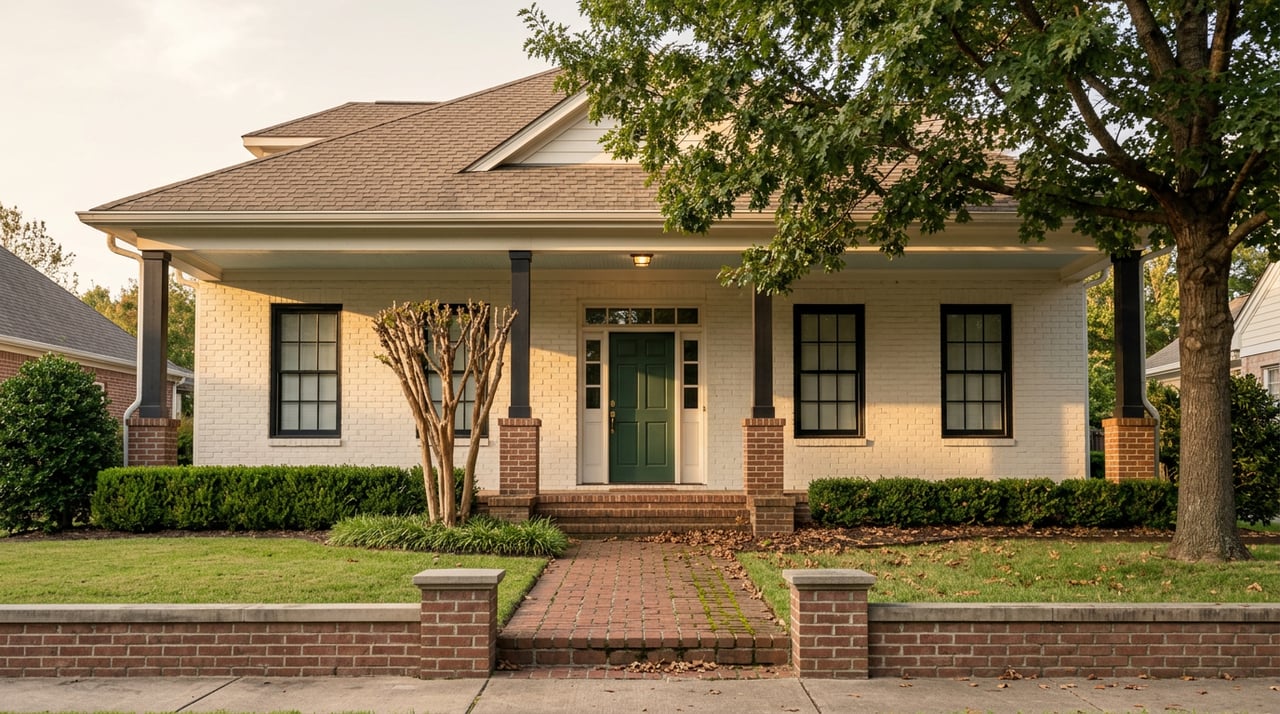
Two houses sit a block apart near Campus Corner. Both were built before 1935. Both have the deep porches, mature oaks, and brick-paved feel that make this part of Norman photograph so well. A buyer touring both on the same Saturday could reasonably assume they come with the same rules.
They don't. One sits inside a boundary the City of Norman drew in 1995. The other doesn't. That single fact, not the age of the house, not the finishes inside it, is what actually determines whether you'll need city approval to replace a window five years from now.
Real estate copy throws the word "historic" around loosely here, and for good reason: Norman has several neighborhoods built in the first few decades of the 20th century that all look and feel the part. But whether a neighborhood has actual legal protection matters more to a buyer than almost anything on the spec sheet.
The Chautauqua Historic District, established in 1995, covers roughly 153 residential structures between Symmes Street and Brooks Street, built mostly in the 1920s. The Miller Historic District, designated two years later according to the Miller Historic District guidelines, covers more than 150 homes dating back to 1910. Both are overseen by Norman's Historic District Commission, and both come with a real, enforceable rulebook for anyone who buys in.
The OU Daily reports that Old Silk Stocking, despite being one of the most talked-about historic neighborhoods in the city and home to the Moore-Lindsay Historic House Museum, is not one of them. It is not defined by the city as a historic district. It is simply a neighborhood that contains some of Norman's oldest standing homes, which is a very different thing legally.
If you buy in Chautauqua or Miller, any exterior work that changes how the structure looks from the street triggers a review by the Historic District Commission, or by the city's Historic Preservation Officer through an administrative bypass for smaller projects. That covers replacing doors and windows, putting up a fence, adding a pool, or pouring new concrete for parking. The application costs $75, and it has to be filed 24 days before the commission's monthly meeting, which happens the first Monday of the month.
Routine maintenance and repair is exempt, so re-roofing with matching materials or repainting in an approved color scheme typically won't require a hearing. But anything that changes the exterior character of the house does, and that turnaround time is worth building into your renovation budget before you close, not after.
Because Old Silk Stocking isn't a designated historic district, none of that applies there. What does apply is something less visible on a walking tour: as the Old Silk Stocking Neighborhood page notes, nearly 20 blocks in the heart of the neighborhood are zoned R-3 Multi-Family, with another 20 zoned R-2 Two-Family, despite a streetscape that reads as entirely single-family. The zoning has allowed more density than the neighborhood's character suggests for decades. It just hadn't been tested much until recently.
Robyn Tower, who has lived in the neighborhood for 42 years and now leads its neighborhood association, has watched that zoning start to matter since OU's move to the Southeastern Conference in 2024 brought a wave of new visitors and short-term rental activity to the area.
"Airbnbs are a big issue," Tower told The OU Daily.
Her concern isn't abstract. What changed is the demand pulling investors toward it.
For a buyer, that's the practical difference between the two situations. In Chautauqua and Miller, the exterior of your neighbor's house is protected by ordinance whether they like it or not. In Old Silk Stocking, it isn't, and the zoning underneath the neighborhood was never built to hold the line on its own.
| Area | Historic district status | What changes after you close |
|---|---|---|
| Chautauqua | Locally designated, 1995 | Exterior changes require a Certificate of Appropriateness |
| Miller | Locally designated, 1997 | Same COA review process, applies to 150-plus homes |
| Old Silk Stocking | Not a designated historic district | No COA requirement; R-3/R-2 zoning already permits higher density |
| Summit Lakes, Sterling Heights, Rock Creek Road corridor | Newer construction | Inspection priorities shift toward roof and HVAC systems |
The age gap between these neighborhoods shows up just as clearly in the inspection report. In the Classen and Miller Historic areas, a sewer scope inspection is worth the extra fee because it often reveals aging clay sewer lines that a standard visual walkthrough won't catch. Brookhaven, with its blend of mid-century ranches and updated interiors, tends to raise questions about older electrical and plumbing systems hiding behind newer finishes.
Head the other direction, toward Summit Lakes, Sterling Heights, or the newer pockets along Rock Creek Road, and the inspection conversation shifts almost entirely to builder-grade finishes, HVAC systems, and roofing rather than foundations or sewer lines. Out toward East Norman and Lake Thunderbird, where lots get larger and some properties still run on wells and septic systems, an FHA water test becomes the item you don't want to skip.
None of this is unique to any one house. It's a function of Norman's soil. Central Oklahoma sits on expansive clay that swells when it rains and shrinks during dry stretches, a cycle that can shift the ground under a foundation several inches over the course of a season. Older pier-and-beam homes in the historic core tend to show that movement in sticking doors and hairline cracks well before a newer slab foundation would. It's a maintenance reality of buying old in this part of the state, not a defect specific to any one listing, and it's exactly why a foundation-focused inspection matters more here than it would on a five-year-old build.
There's a newer variable now too. On May 12, 2026, OU and the city of Norman broke ground on the Rock Creek Entertainment District, a $1.1 billion, 269-acre development near I-35 and Rock Creek Road that will eventually include an 8,000-seat arena for OU basketball and gymnastics, along with retail, housing, and office space. Construction officially started May 19, and Rainier Companies, the development partner, has targeted the 2028-29 basketball season for the arena's opening.
That's still a few years out, but it's already shaping how people think about the historic core's future. Amy Pence, who manages the Moore-Lindsay Historic House Museum in Old Silk Stocking, put the concern plainly:
"I'm worried that the arena is going to pull everyone in that direction," Pence told The OU Daily.
If you're buying near campus for the walkability and the foot traffic, it's worth understanding that the center of gravity for Norman's entertainment scene is actively shifting a few miles away, on a multi-year build-out timeline that won't fully resolve until closer to the end of the decade.
Before you get attached to a listing in this part of town, find out which side of the boundary it actually sits on. The city's historic district maps are public record, and the difference between "inside Chautauqua" and "two blocks outside Chautauqua" is the difference between a formal review process for your future renovations and none at all.
If you're buying in Miller or Chautauqua, budget time, not just money, for the Certificate of Appropriateness process on any exterior project. If you're buying in Old Silk Stocking, ask what the zoning actually allows on your specific block, since the streetscape won't tell you. And on any pre-1960s home near the historic core, a sewer scope and a foundation-focused inspection are worth the extra cost regardless of how solid the house feels on a walkthrough.
How should I factor historic designation into my plans? The cost and timeline of future exterior renovations are worth considering.
What counts as exempt from the Certificate of Appropriateness process? Ordinary maintenance and repair, like repainting in an existing color or replacing a broken window pane with matching glass, typically doesn't require review. Anything that changes the appearance, materials, or footprint of the exterior does.
Can I still add a fence or a pool in Chautauqua or Miller? Yes, but both require a Certificate of Appropriateness before you start, so plan for that review window before you schedule a contractor.
If you're weighing a home in one of Norman's older neighborhoods against something newer on the edge of town, the details above are exactly the kind of thing worth talking through before you write an offer, not after. Jennifer Elliston can walk you through what a specific address actually allows, what an inspection should focus on given its age and location, and how the timeline on Rock Creek fits into your decision. Let's Connect.
This article is general information, not legal, tax or financial advice. Consult a qualified professional about your situation.
Stay up to date on the latest real estate trends.
Rooted in trust, expertise, and sincere dedication, Jennifer brings a lifelong appreciation of what “home” means to every client and every move.