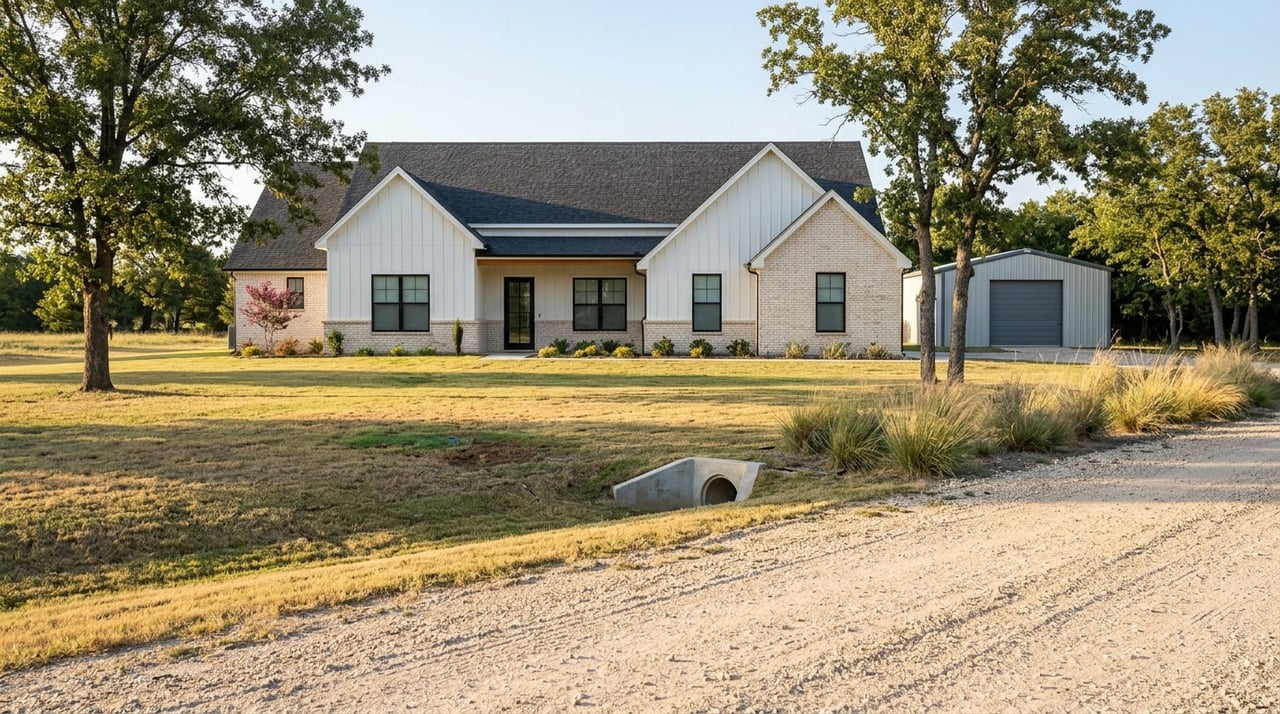
Key Considerations When Buying Acreage Near Goldsby
May 28, 2026
May 28, 2026
Thinking about buying acreage near Goldsby? A larger tract can give you more space, more privacy, and more flexibility, but it also comes with details that matter a lot more than they do on a typical neighborhood lot. If you want to avoid surprises after closing, it helps to know what to verify before you fall in love with the land. Let’s walk through the key things to check so you can move forward with more clarity and less stress.
Acreage can look perfect on paper and still create daily headaches if access is not straightforward. Near Goldsby, commute planning matters because the town sits along I-35 between Norman and Purcell, and ODOT has active improvement work in the area that is described as continuing through 2026.
Before you buy, drive the route at the same times you would actually travel for work, school, or errands. ODOT says I-35 will remain open during construction with two lanes in each direction, but lane additions, ramp changes, and drainage work can still affect how your commute feels day to day.
You also want to confirm legal ingress and egress. OSU Extension notes that rural access can create legal issues when it relies on informal arrangements instead of recorded easements. A driveway, lane, or path may seem usable, but recorded documents matter if you want confidence that the tract is truly accessible.
If the property uses a shared drive or a non-public access route, ask to review the recorded easement documents early in the process. This can help you understand who has the right to use the road, who maintains it, and whether any restrictions apply.
This is especially important for acreage that may eventually need utility work, a new home site, or septic placement. Recorded easements can affect both your current use and your future plans.
Goldsby’s north boundary includes the South Canadian River corridor, so drainage deserves careful attention on some acreage tracts. If a property is near lower ground, creek areas, or the river corridor, it is smart to look closely at floodplain mapping and site drainage before closing.
A beautiful piece of land can still have practical issues if water collects in the wrong places. Standing water, washouts, erosion, and soggy access points can affect how usable the property feels throughout the year.
When you tour acreage, look beyond the views. Pay attention to slope, low spots, signs of erosion, and whether the driveway or building area appears vulnerable after heavy rain.
This kind of review does not replace a survey or flood determination, but it can help you ask better questions during due diligence. On acreage, drainage problems often become long-term ownership costs if they are missed upfront.
One of the biggest acreage questions is simple: Where will your water come from? In Goldsby, the official water utility is Goldsby Water Authority, and it offers a process for new service requests.
That does not mean every tract already has service in place. You will want to verify whether public water is available to the parcel, whether service has been established before, and what steps may be required to connect.
If the property uses a private well instead, the responsibility shifts to you as the owner. OSU Extension says well owners are responsible for water quality and should test annually for nitrates, total dissolved solids, pH, and fecal coliform.
If there is a private well on the property, ask for records on installation, maintenance, and past water testing if available. OSU Extension also recommends an annual inspection by a licensed or certified well professional.
That matters because a well is not a one-time feature you can ignore. It is part of your long-term ownership plan and budget.
Septic is another major acreage topic, especially if you plan to build, remodel, or adjust how the land will be used. Oklahoma DEQ regulates on-site sewage systems, and for a new or modified system, buyers should expect a Report for On-Site Sewage, a soil profile test, an Authorization to Construct, and inspection and approval before the system goes into operation.
In practical terms, septic is not something to leave vague during negotiations. You want to know whether the property already has an approved system, whether that system fits your intended use, and whether there is enough suitable area for repairs or future changes if needed.
DEQ also notes that septic-related service requests require the property’s Section, Township, and Range. You can usually find that information in the deed or county assessor records, and it is helpful to gather it early.
OSU Extension recommends keeping at least 75 feet between a water well and a septic system, or 100 feet if the well is downslope of the septic drain field. That spacing is a strong reason to map the well, tank, and drain field before you close.
This matters even more if you are thinking about adding structures later. The placement of one system can limit where the next improvement can go.
Acreage does not always mean unrestricted use. Goldsby’s planning resources include zoning maps, subdivision regulations, the 2045 Comprehensive Plan, and permit information, so it is important to confirm what rules apply to the specific tract you are considering.
If the property is inside town limits, you should not assume that barns, shops, additions, fencing changes, or site work can happen without review. Goldsby’s FAQ says some minor repairs under $2,000 may not need a building permit, and some accessory buildings under 100 square feet may be exempt if they have no utility hookups and do not violate zoning or right-of-way restrictions.
Larger outbuildings and site improvements still need permit review. That is why it helps to ask about your future plans before you buy, not after.
If the parcel is outside the colored areas on Goldsby’s map, it is considered unincorporated. In that case, the town directs buyers to McClain County Emergency Management for permitting and addressing.
That distinction can affect which office you contact and which process you follow. It is a small step that can save a lot of confusion later.
Beyond zoning, acreage can come with private restrictions or recorded agreements that shape how the land can be used. Shared drives, agricultural use arrangements, utility easements, and other recorded documents can all affect your plans.
OSU Extension recommends legal advice when rural road or leasing language is unclear. That advice can be especially helpful if you are relying on shared access or evaluating a tract with multiple use-related documents in place.
A recorded easement also matters for septic. Oklahoma septic rules show that septic components must be on the owner’s property or in a dedicated recorded easement. If access or improvements depend on land outside your boundary, the paperwork needs to support it.
Acreage ownership is not just about the purchase price. OSU Extension recommends a businesslike approach to rural land, including annual check-ins, a written management plan, and yearly photos or records to catch slow changes like erosion, drainage problems, or overgrazing.
That guidance is helpful because many acreage costs are recurring, not one-time. The most practical budget items often include:
If the tract includes pasture, timber, or a pond, it may also make sense to get input from NRCS, the county Extension office, or Forestry Services rather than relying only on the seller’s description. That extra step can help you better understand the land you are buying and what it may need over time.
When you are buying acreage near Goldsby, it helps to stay organized. A clear checklist can keep small issues from becoming expensive surprises.
Here is a simple framework to use:
Taking these steps can help you buy with confidence instead of guesswork. On acreage, details matter, and the right guidance can make the process feel much more manageable.
If you are looking at acreage near Goldsby and want a calm, step-by-step approach, Jennifer Elliston can help you sort through the property details and move forward with confidence.
Stay up to date on the latest real estate trends.
Rooted in trust, expertise, and sincere dedication, Jennifer brings a lifelong appreciation of what “home” means to every client and every move.